Draeger clinical article
How to Choose Medical Imaging Equipment: A Buyer's Checklist
2026-06-16 · Jane Smith
-
Who This Checklist Is For
-
Step 1: Map Your Actual Clinical Needs (Don't Skip This)
-
Step 2: Evaluate Total Cost of Ownership (Not Just the Sticker Price)
-
Step 3: Verify Regulatory Compliance and Service Support
-
Step 4: Test the Workflow Integration (Not Just the Machine)
-
Step 5: Plan for the Future (Not Just Today's Problem)
-
Common Mistakes to Avoid
Who This Checklist Is For
If you're managing equipment purchasing for a hospital or a multi-location healthcare facility — and you're not a radiologist or a biomedical engineer — this checklist is for you.
I'm an office administrator for a 400-person healthcare network. I manage all medical equipment ordering — roughly $2 million annually across 15+ vendors. I report to both operations and finance. When I took over purchasing in 2020, I had to figure out how to pick the right medical imaging gear without a clinical background. This is the checklist I wish I'd had.
Here are five steps to walk through before you sign any PO.
Step 1: Map Your Actual Clinical Needs (Don't Skip This)
Sounds obvious, right? But I've seen teams jump straight into spec sheets without asking the most basic question: what problem are we actually solving?
For example: If you're looking at a cryosurgery device and a remote patient monitoring platform at the same time, you're probably serving different departments with different patient volumes. Don't bundle them into one RFP out of convenience — that'll confuse vendors and muddy your evaluation.
Here's what to nail down first:
- Volume: How many scans or procedures per week?
- Patient mix: Adult vs. pediatric? Routine vs. emergency?
- Workflow: Where does this sit — ER, OR, outpatient clinic?
- Integration: Does it need to talk to your existing EMR or PACS?
I learned this the hard way. In 2022, we ordered a high-end MRI for the outpatient clinic — only to realize it needed a dedicated power line that we didn't have. That ate two months and $40,000 in construction. Put another way: know your facility's limits before you shop.
Step 2: Evaluate Total Cost of Ownership (Not Just the Sticker Price)
What was best practice in 2018 may not apply now. The medical imaging market has shifted — more vendors offer subscription models, service contracts vary wildly, and consumables can cost more than the machine itself over a five-year period.
When I look at a quote, I ask for a five-year TCO breakdown:
- Purchase price (or lease terms)
- Installation and site prep (often overlooked)
- Warranty — basic vs. premium
- Service contract — annual cost and what's covered
- Consumables — How much per patient or per month?
- Software updates — included or extra?
- Training — initial and ongoing
Honestly, I have mixed feelings about service contracts. On one hand, they feel like a money grab. On the other, I've seen an uninsured breakdown shut down a radiology suite for two weeks. That's lost revenue — not to mention the impact on patient care.
Note: pricing was accurate as of Q1 2025. The medical device market shifts frequently, so verify current rates before budgeting.
Step 3: Verify Regulatory Compliance and Service Support
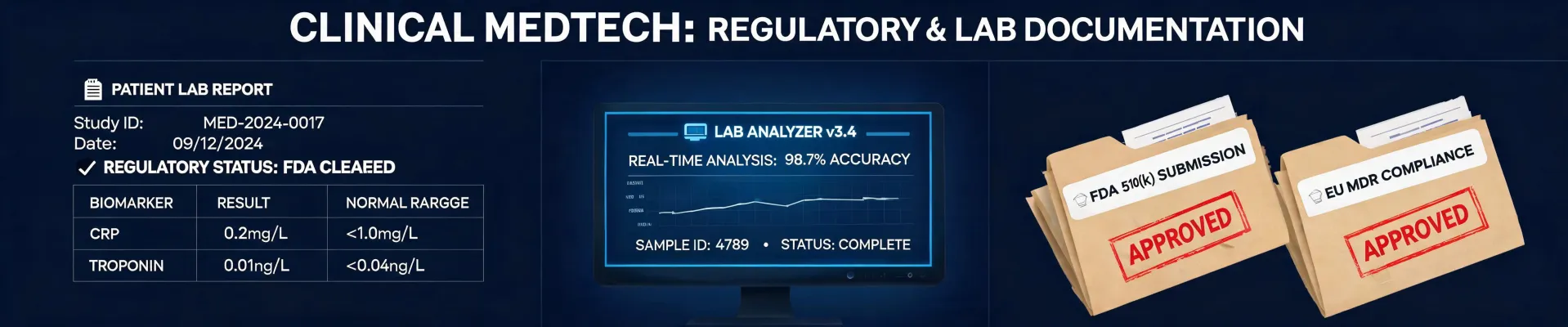
This is where the Draeger name really matters. Whether you're evaluating a ventilators, remote patient monitoring systems, or fire fighting equipment for your facility's safety team — compliance is non-negotiable.
I check three things before I consider any vendor:
- FDA clearance (or equivalent for your region)
- Service manual availability — Draeger, for example, provides detailed manuals (like the Draeger ti500 service manual) for trained technicians. That's a green flag.
- Local support — Can they send a tech within 24 hours? Do they have a service center in your state or country?
One more thing: I should add that some vendors have great equipment but lousy customer service. I'd rather pay 10% more for a brand that picks up the phone when a machine goes down. That's where Draeger's reputation for emergency care and safety equipment sets them apart — they serve both hospitals and industrial safety managers, so they understand high-stakes environments.
Step 4: Test the Workflow Integration (Not Just the Machine)
A machine that takes amazing images but doesn't fit your workflow will frustrate your team — and your clinicians will let you know.
Ask for a demo or a trial installation before you buy. If the manufacturer won't do that, that's a red flag. Here's what to test:
- User interface: How intuitive are the controls? How long does it take to train a new tech?
- Data integration: Does the remote patient monitoring platform sync with your existing system? Or will your IT team need to build custom interfaces?
- Report generation: How easy is it to pull data for audits or research?
If I remember correctly, we once bought a device that required a separate workstation just to view the images. The sales rep said it would integrate — it didn't. That mistake cost us $12,000 in hardware we didn't budget for.
Step 5: Plan for the Future (Not Just Today's Problem)
The fundamentals of imaging equipment haven't changed — you need good images, reliable hardware, and fair pricing. But how you get there has evolved.
Think about:
- Scalability: Will this support your patient volume in 3–5 years?
- Telemedicine readiness: Can it feed into remote consultations or home monitoring programs?
- Technology upgrades: Is the hardware modular so you can upgrade parts instead of replacing the whole system?
- Environmental impact: Energy efficiency, recyclability, and waste management of consumables — this is becoming a bigger factor in hospital purchasing decisions.
Take it from someone who manages a fleet of 40+ monitors across 3 locations: you don't want to be stuck with a system that can't adapt. I'd rather pay a little more now than be forced to replace everything in three years.
Common Mistakes to Avoid
Before I wrap up, a few things I've learned the hard way:
1. Don't buy based on brand alone. Even trusted names like Draeger make niche products that may not fit your specific use case. Evaluate each line item.
2. Don't skip the hidden costs. I already mentioned installation and consumables, but also factor in: training time, IT integration hours, and any regulatory filing fees (like radiation safety registration for X-ray equipment).
3. Don't assume vendor specs are accurate. I always cross-reference with independent sources or request a peer review from a non-competing hospital. That's saved me from buying overrated equipment more than once.
4. Don't forget the human element. The best machine in the world won't work well if your team resists using it. Involve the end users early in the selection process — their buy-in is worth more than any spec sheet.
One last note: The regulatory landscape (FDA, ISO, etc.) changes frequently. As of 2025, check official sources for the latest requirements in your jurisdiction.

Jane Smith
I’m Jane Smith, a senior content writer with over 15 years of experience in the packaging and printing industry. I specialize in writing about the latest trends, technologies, and best practices in packaging design, sustainability, and printing techniques. My goal is to help businesses understand complex printing processes and design solutions that enhance both product packaging and brand visibility.